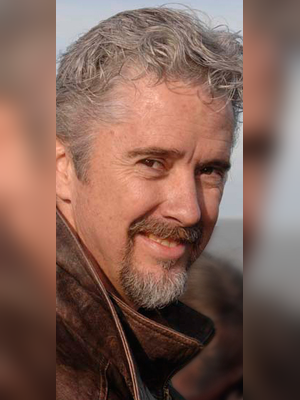

Tom White
Call to discuss a custom commission bronzes or to inquire about Tom’s existing line of statues.
Contact us by EMAIL or phone: 1-800-320-9201.
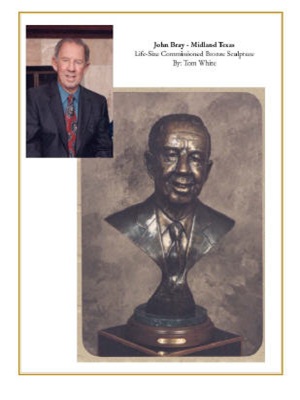
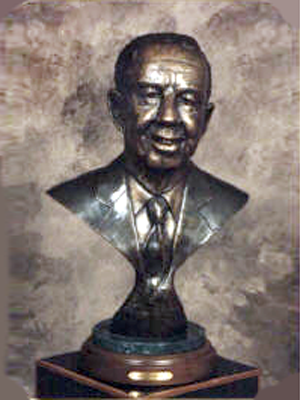
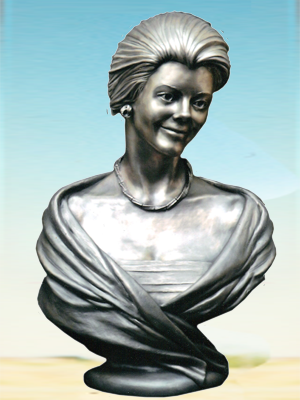
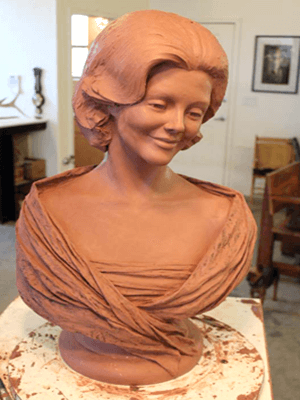
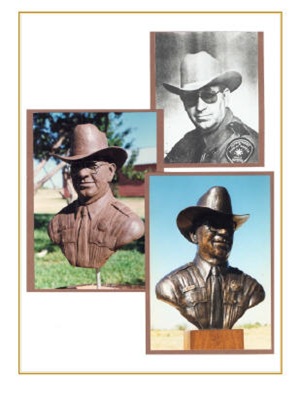
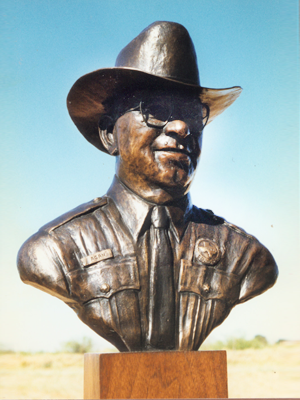
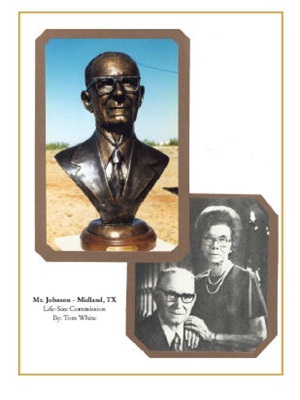
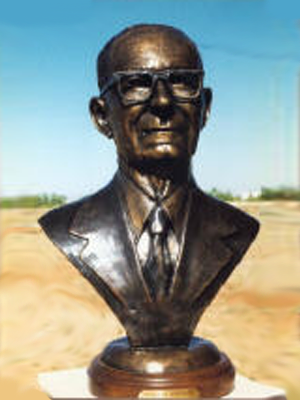
Tom White was commissioned by the families of those featured below to create custom portrait bust sculptures to honor their loved ones. These are examples of what can be created for you, your family, or your business to honor those you love.
Tom also specializes in memorial bronze sculptures and public monuments. These include current and historical figures.
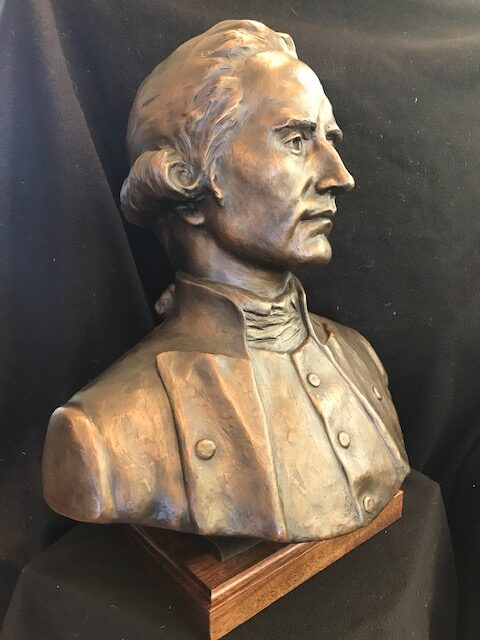
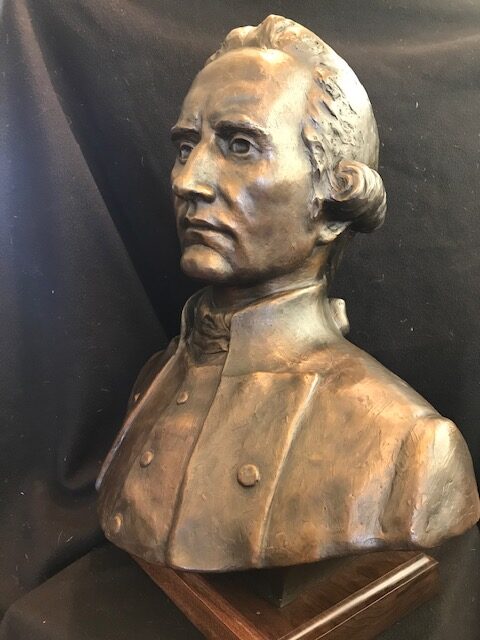
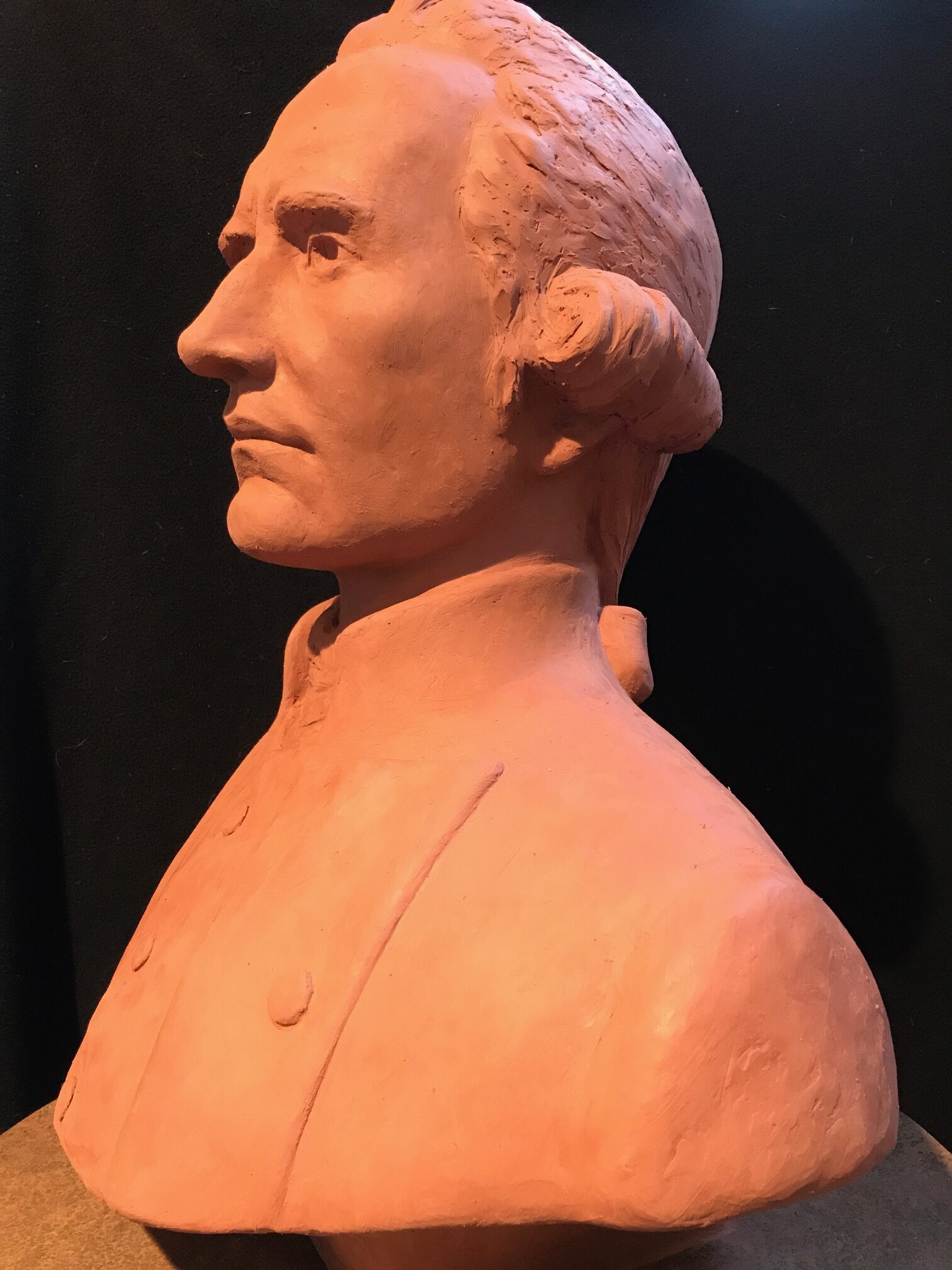
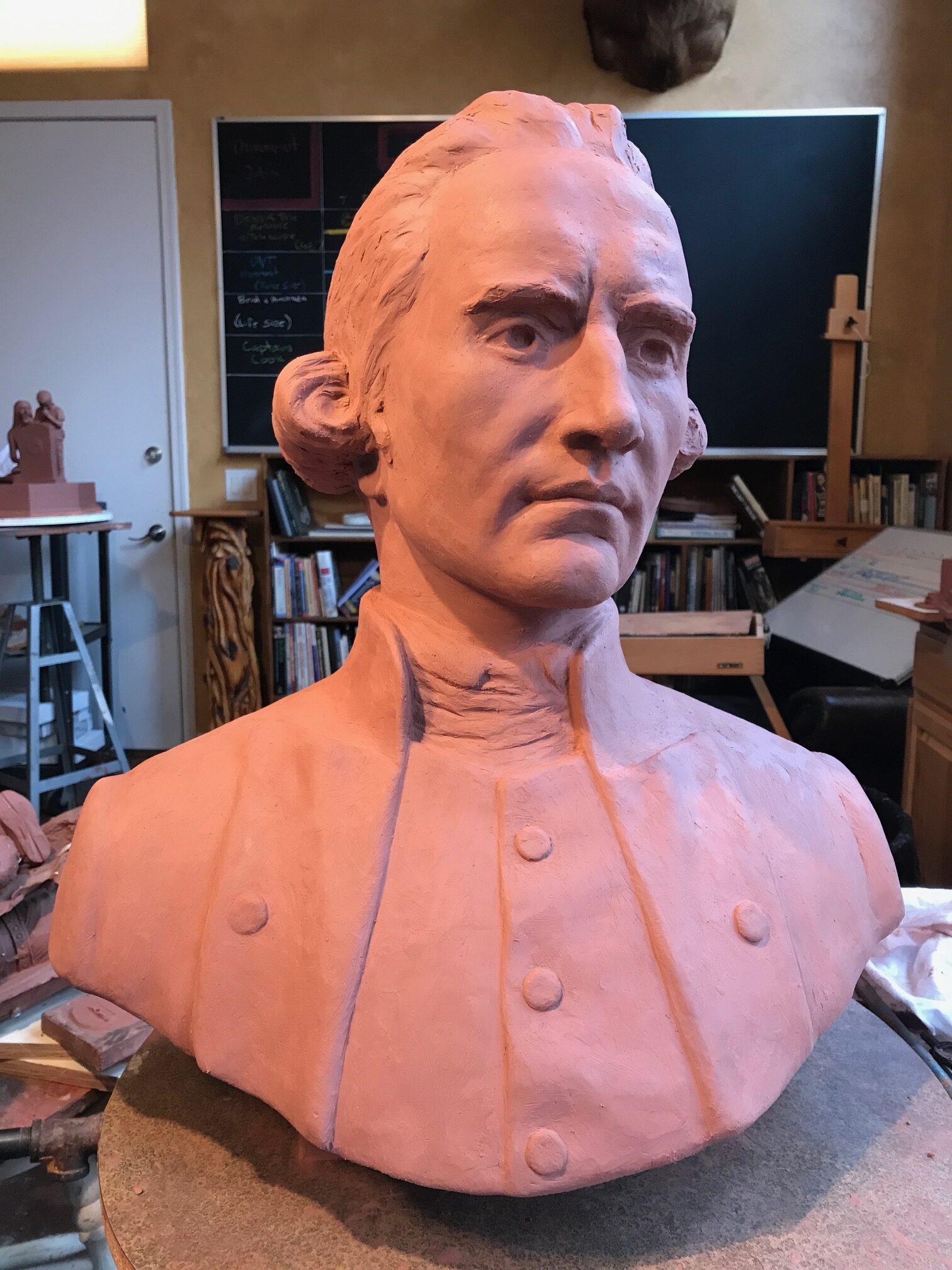
Captain James Cook, historic portrait bust of world-famous British Explorer.
Tom White created this historical bronze bust sculpture of Captain James Cook at the request of Ed Grusnis, Curator of The Antiquarium in Houston, Texas. The Antiquarium sells original rare maps and antique prints. Tom researched Cook’s vast accomplishments and voyages to recreate accurate historical costuming and effects. Recasts of Tom’s custom bust of Captain Cook are available.
Captain Cook was a renowned British explorer, navigator, cartographer, and Captain in the British Royal Navy, famous for his three voyages (1768 to 1779) in the Pacific and to Australia, in particular. In these voyages, Cook sailed thousands of miles across largely uncharted areas of the globe.
Cook made detailed maps of Newfoundland prior to making his three voyages to the Pacific, during which he achieved the first recorded European contact with the eastern coastline of Australia and the Hawai’ian Islands (which he originally named the Sandwich Islands). He also was the first to circumnavigate New Zealand. His voyages were marked by a combination of seamanship, superior surveying and cartographic skills, physical courage, and an ability to lead men in adverse conditions.
Call if you have a favorite historical figure you would like for Tom to create in bronze for you.
…Tom & Marcey White
James Cook was a naval captain, navigator and explorer. He was born in England on October 27, 1728. Cook worked as Scottish farmhand with his until the age of 18. He was offered an apprenticeship by a Quaker shipowner in a small seaside village near Whitby, England. The experience opened up a seafaring spirit in Cook.
Cook eventually joined the British Navy and, at age 29, was promoted to ship’s master. During the Seven Years War (1756-1763), he commanded a captured ship for the Royal Navy. He subsequently surveyed and mapped much of the entrance to the Saint Lawrence River during the siege of Quebec, which brought him to the attention of the Admiralty and the Royal Society. This acclaim led to his commission and the direction of British overseas exploration. In 1768 he took command of the first scientific expedition to the Pacific. On his ship, the HMB Endeavour, Cook charted New Zealand and the Great Barrier Reef of Australia. This area has since been credited as one of the world’s most dangerous areas to navigate.
After his return to England, Cook was chosen to circumnavigate and explore Antarctica. On this voyage, he charted Tonga, Easter Island, New Caledonia, the South Sandwich Islands and South Georgia, and disproved the existence of Terra Australis, a fabled southern continent. Cook named the Hawai’ian Islands the “Sandwich Islands” after the Earl of Sandwich, a patron also known as John Montagu.
Cook’s voyages are credited with helping to guide generations of explorers and with providing the first accurate map of the Pacific. Many believe that Cook did more to “fill the map of the world” than any other explorer in history. During all his voyages, Cook successfully fought scurvy, a deadly disease caused by vitamin deficiency, by feeding his crew a diet that included watercress, sauerkraut and orange extract. During his third exploratory voyage, Cook and his crew were in Kealakekua Bay (Hawai’i) for a winter layover. While attempting to detain the ruling chief of the island (Kalani’opu’u of Hawaii) and to reclaim a cutter taken from one of his ships, Cook was attacked and killed. He died in the skirmish on February 14, 1779.
On a visit to Kauai in August 2022, Marcey, Tom’s wife, was fascinated to learn more of Captain Cooks expoits on the island and learned of the location of his last, fatal encounter there. She visited the life-size statue of Captain Cook and took a photo to show Tom. Marcey and Tom both enjoy viewing different artists interpretation and creation of historical figures in their travels.
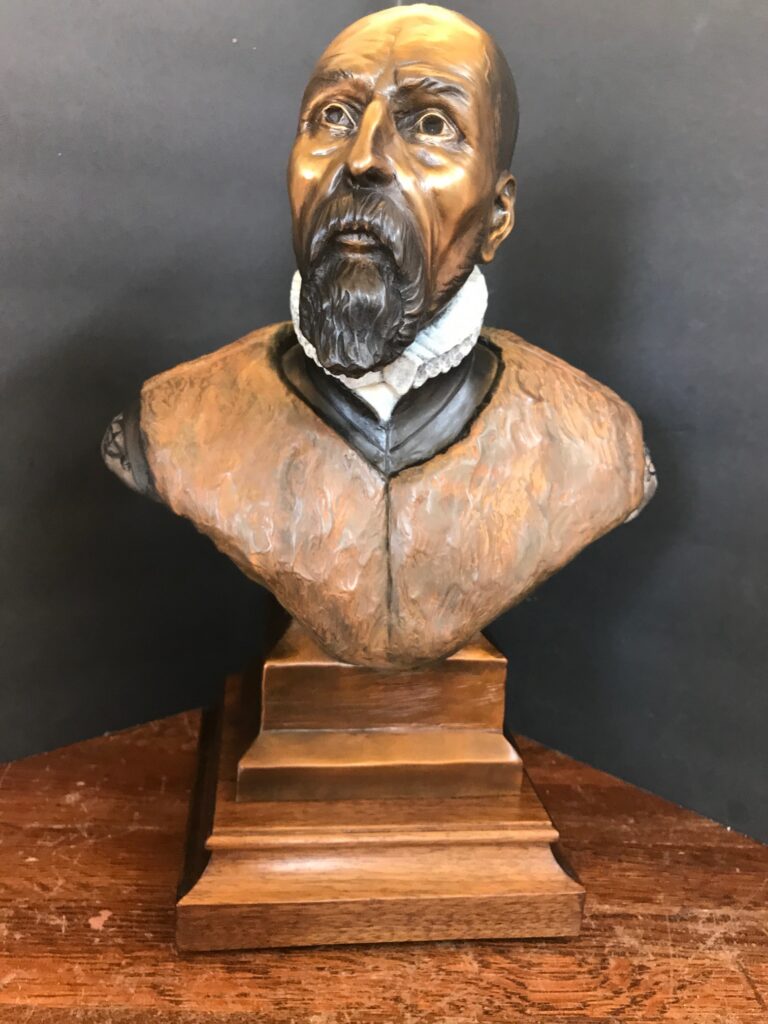
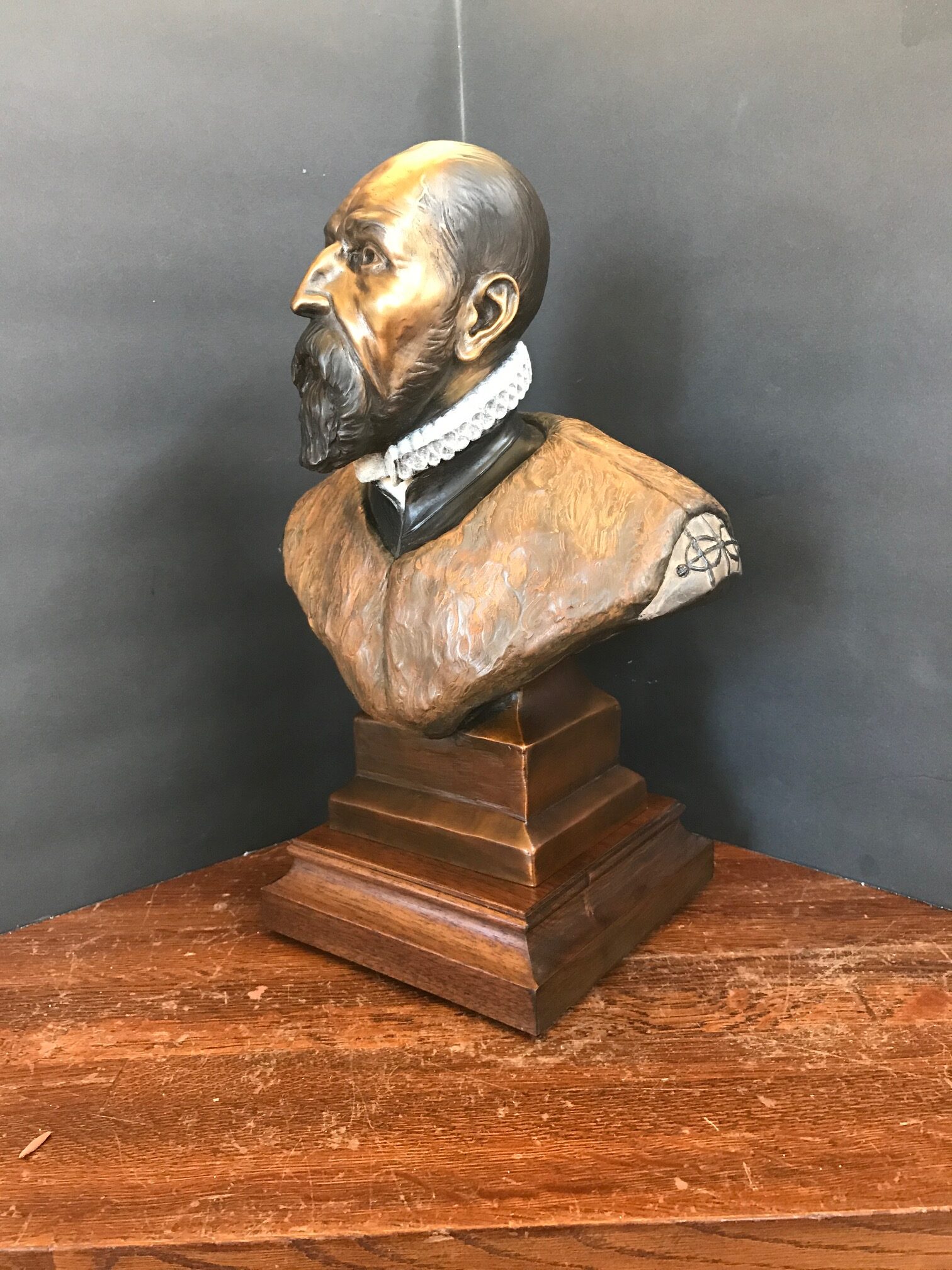
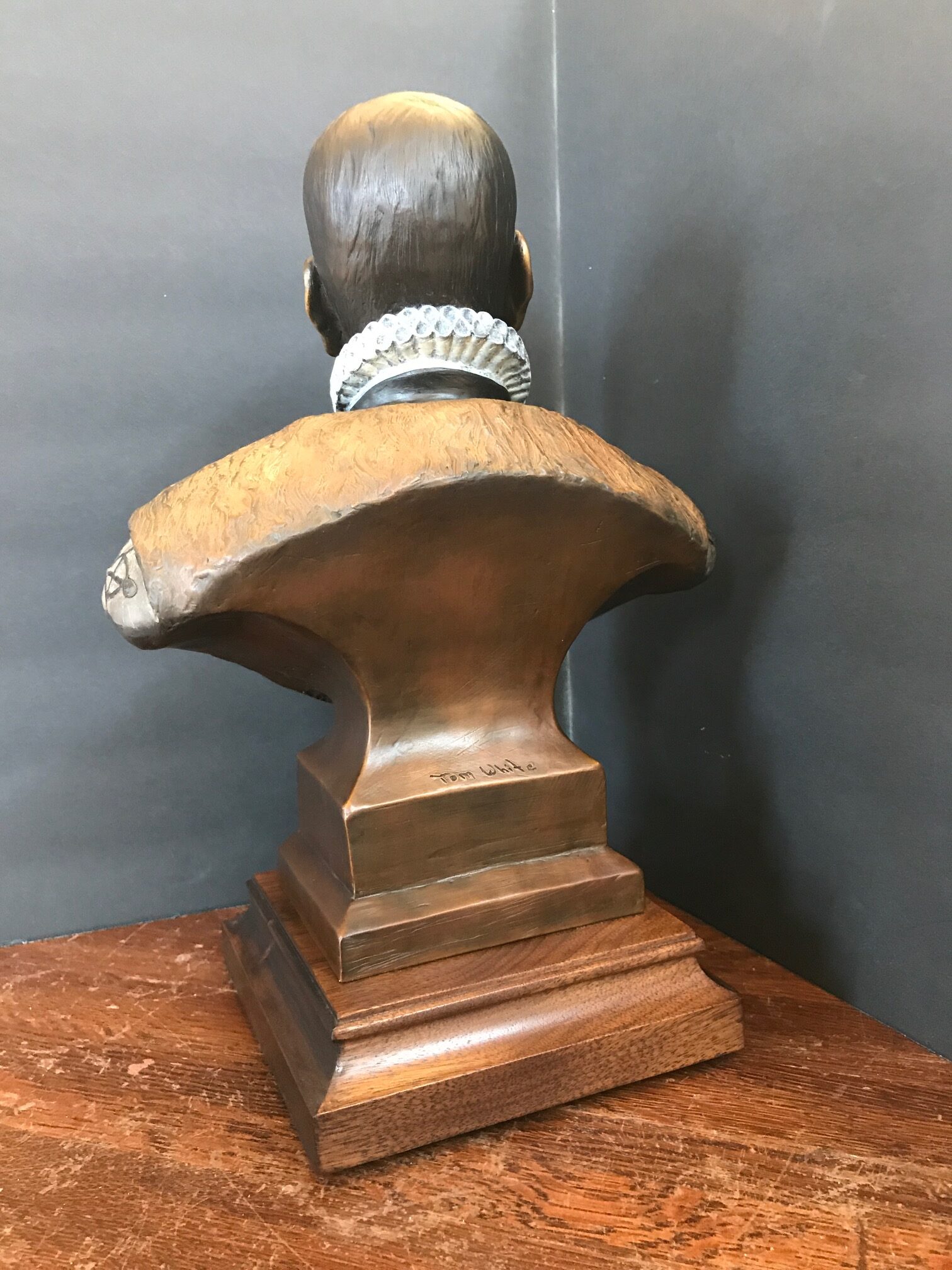
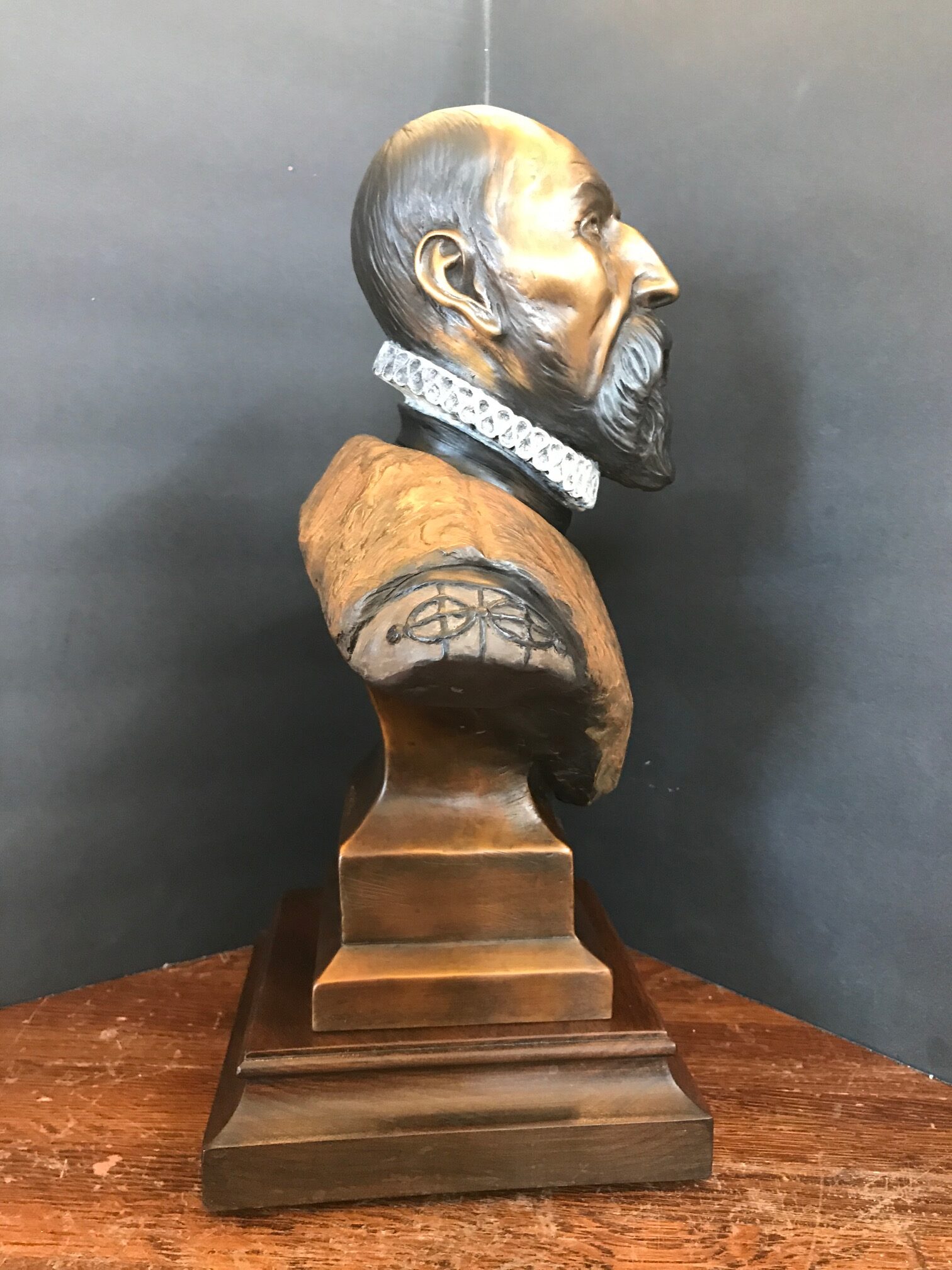
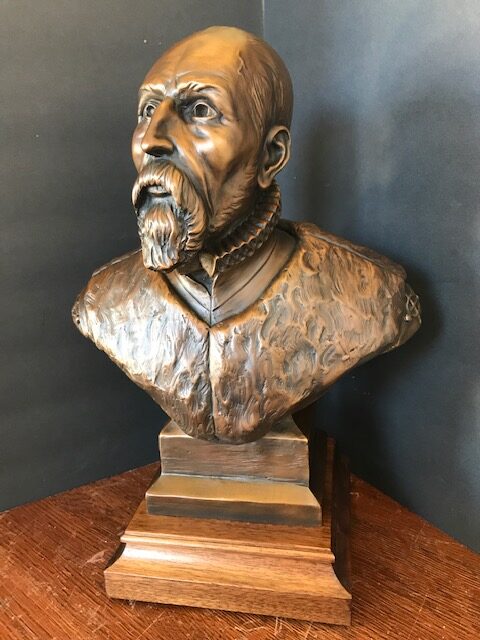
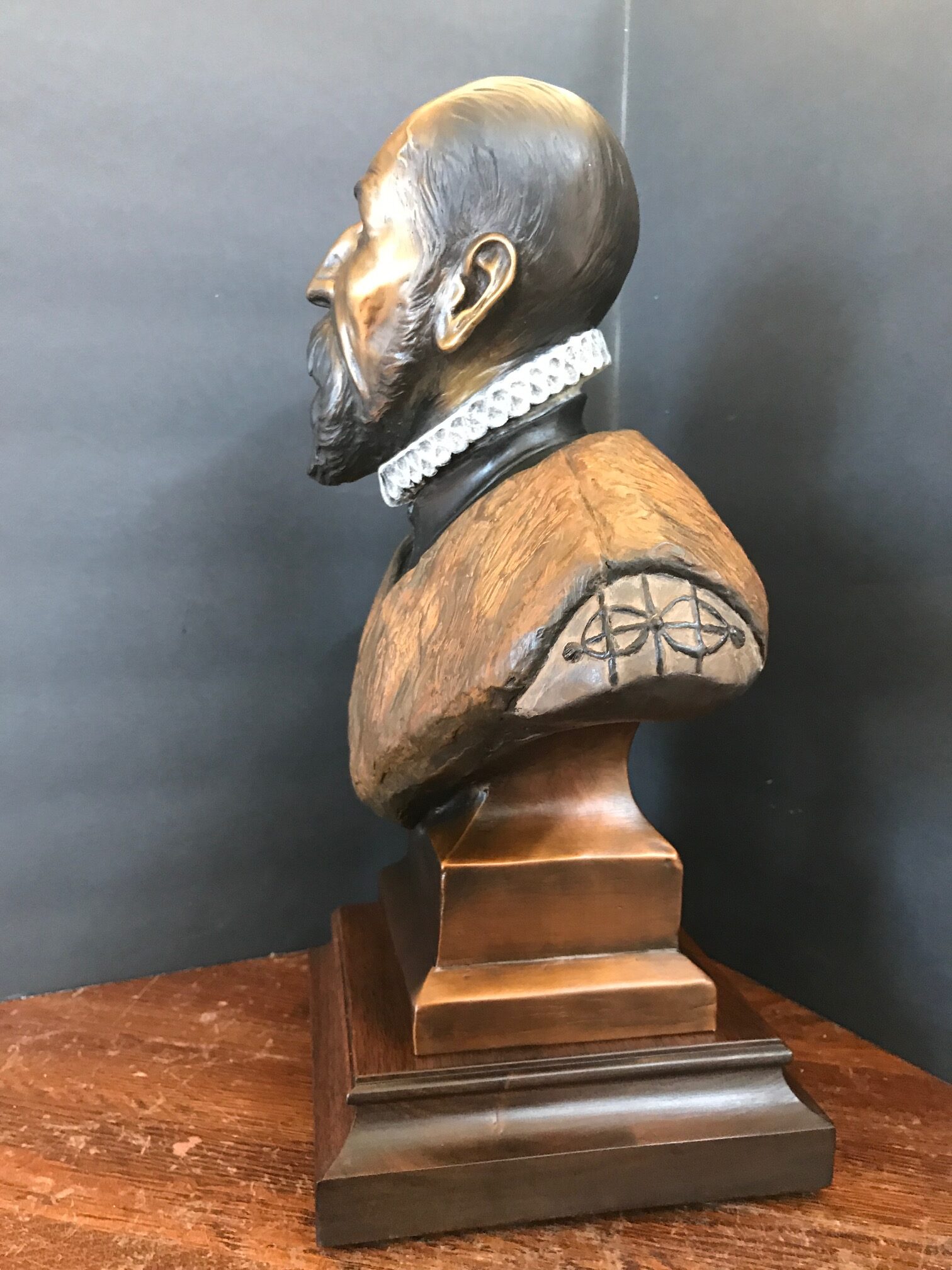
Historical custom bronze portrait bust of Abraham Ortelius, a 16th century cartographer, geographer and cosmographer who created the first modern Atlas by Tom White, monumental bronze sculptor
Tom White created this historical custom portrait bust of Abraham Ortelius at the request of Ed Grusnis, curator, of The Antiquarium in Houston, Texas. Ortelius was the famous creator of the first modern atlas, the Theatrum Orbis Terarum (Theatre of the World) in 1570, and was a Brabantian cartographer, geographer, and cosmographer.
Tom used two different patinas on separate castings of this scuplture. One incorporates the white ruff popular in the 1500s and similar coloring to some of the styles. The other is a traditional french brown patina. Tom loves recreating historically accurate costuming and effects in sculptures like this one. And recasts of “Abraham Ortelius” custom portrait busts are available in traditional bronze patina, or with historically colored patina.
He was one of the most notable figures of the Golden Age of Netherlandish cartography (1570s-1670s). The publication of his atlas in 1570 is often considered as the official beginning of the Golden Age. And he is also believed to be the first person to imagine that the continents were joined before drifting to their present positions.
Ortelius was born in April 1527 (either the 4th or 14th) in the city of Antwerp, then in the Hapsburg Netherlands (modern-day Belgium). The Ortelius family were originally from Augsburg, a free imperial city of the Holy Roman Empire, but had left following the death of his father. He traveled extensively in Europe and entered the Antwerp Guild of Saint Luke in 1547 as an illuminator of maps. He supplemented his income trading in books, prints and maps, and his journeys led him to meet Gerardus Mercator, who’s influence in map making and scientific geography expanded his career.
…Tom & Marcey White